

Commentary
Maha Yahya
{
  "authors": [
    "Maha Yahya"
  ],
  "type": "commentary",
  "blog": "Diwan",
  "centerAffiliationAll": "",
  "centers": [
    "Malcolm H. Kerr Carnegie Middle East Center",
    "Carnegie Endowment for International Peace"
  ],
  "englishNewsletterAll": "",
  "nonEnglishNewsletterAll": "",
  "primaryCenter": "Malcolm H. Kerr Carnegie Middle East Center",
  "programAffiliation": "",
  "regions": [
    "Lebanon"
  ]
}
Source: Getty
Lying at the heart of Lebanon’s dysfunction is an inability to secure accountability and institutional legitimacy.
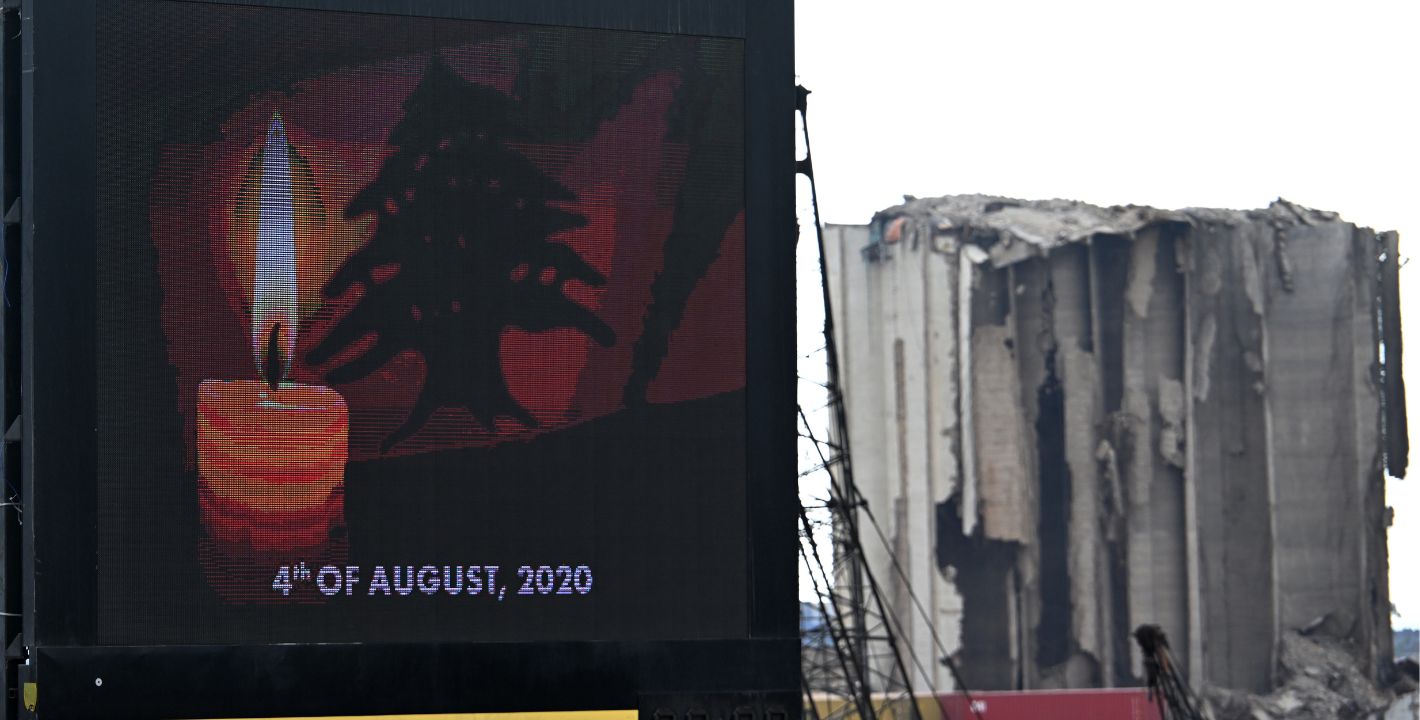
Every August 4, the same ritual. A gutted grain silo, photographs of those lost in the Beirut port explosion, commemorations, interviews with families demanding justice. Neighborhoods still carry the scars of the explosion in 2020. And while in March a judge finally closed the investigation to determine those responsible for the crime, naming some seventy suspects, no trial has been scheduled and no one has yet been brought to account.
But this is not an exception. In Lebanon, it is the pattern. It is easy to blame the slow pace of a judge, corrupt politicians who refuse to provide testimony, security services that do not want to be held accountable for one of the largest non-nuclear explosions in history. But the reality is that the absence of accountability has always been at the heart of Lebanon’s dysfunction.
During the country’s fifteen-year civil war, close to 150,000 people were killed and 17,000 were disappeared. Yet, the conflict was followed by an amnesty law for most crimes committed during its duration, and a political settlement that moved warlords from the streets to the heart of political decisionmaking. No truth commissions were established, no national memorial built to commemorate the war’s victims. Rather, the past remained a foreign country. In the name of peace, Lebanon’s school curriculums skipped over the civil war. Voltaire described history as “a fable agreed upon,” but the Lebanese never rallied around one fable, as each community had, and still has, its own narrative of the conflict. And the Lebanese neither forgave nor forgot. Deliberate misdirection was inscribed into the DNA of the country’s postwar order and governance system—and with it impunity.
The trauma has never healed. Instead, it has multiplied, with assassinations of political figures, journalists, and activists, corrupt politicians who allowed the country to drown in garbage in 2015, repeated wars with Israel, a civil conflict in 2008, and a catastrophic financial collapse in 2019–2020, wiping out billions of dollars in savings and pensions. The World Bank described the latter as among the top three worst economic crises globally since the mid-19th century. Yet while Lebanon’s former central bank governor Riad Salameh has just been rearrested, actual accountability for his crimes is being driven elsewhere. Prosecutors in France, Germany, Switzerland, Luxembourg, and Lichtenstein have charged him with embezzlement, money laundering, fraud, and illicit enrichment, seizing his properties and freezing $92–120 million of his assets. France and Germany have issued arrest warrants.
This same system that protected Salameh allowed Hezbollah to thrive with an armed force that reported to no one in the country and paid allegiance to Iran. The party dragged Lebanon into war in 2006, 2023–2024, and 2026. The very system incapable of upholding justice in Lebanon is the same one that left the country open to outside interference. Today, Israel is occupying large parts of the south, has boasted about its war crimes, and continues to bomb and raze at will. Yet Lebanon remains unable to prevent this. However, the bigger challenge is internal unity. A country that cannot prosecute a corrupt politician or judge certainly cannot hold external parties accountable. On the contrary, in the recent framework agreement with Israel, Lebanon was pressured into signing away its right to seek justice in international legal and political forums.
Reversing such dynamics depends on the willingness of Lebanon’s leadership to restore state authority and institutional legitimacy. This entails reinforcing the independence and effectiveness of the judiciary, restoring the state’s monopoly over the use of force, and placing due process at the center of national priorities. Addressing each of these challenges in isolation risks entrenching Lebanon’s interconnected governance, security, and social shortcomings. It will also perpetuate continued cycles of instability, deepen segmentation of Lebanon’s historical tribulations, reinforce competing communal narratives of victimhood, and further undermine the prospects of a shared national destiny.

Director, Malcolm H. Kerr Carnegie Middle East Center
Maha Yahya is director of the Malcolm H. Kerr Carnegie Middle East Center, where her research focuses on citizenship, pluralism, and social justice in the aftermath of the Arab uprisings.
Recent Work
Maha Yahya
Maha Yahya
Carnegie does not take institutional positions on public policy issues; the views represented herein are those of the author(s) and do not necessarily reflect the views of Carnegie, its staff, or its trustees.
In an interview, Sohaib Jawhar analyzes the profound changes in the ties between the neighboring countries.

Michael Young
Any move by the United States to make good on Trump’s suggestion that Washington persuade Damascus to confront Hezbollah militarily would have catastrophic consequences.

Kheder Khaddour
As talks begin between Washington and Tehran, Beirut has an opening to advance a regional plan for the party’s disarmament.
Michael Young
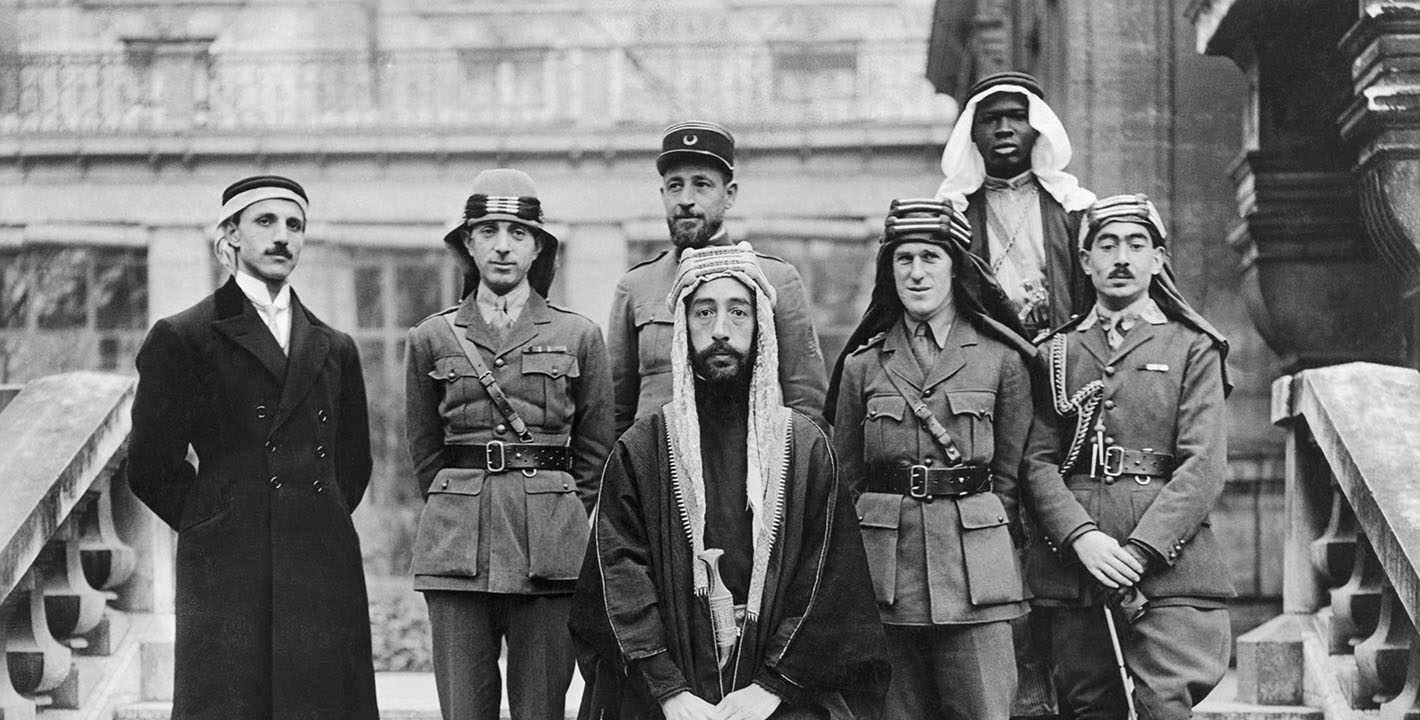
In an interview, Elizabeth Thompson recalls how the country formulated a liberal constitution in 1920, before being denied by France and Britain.
Michael Young
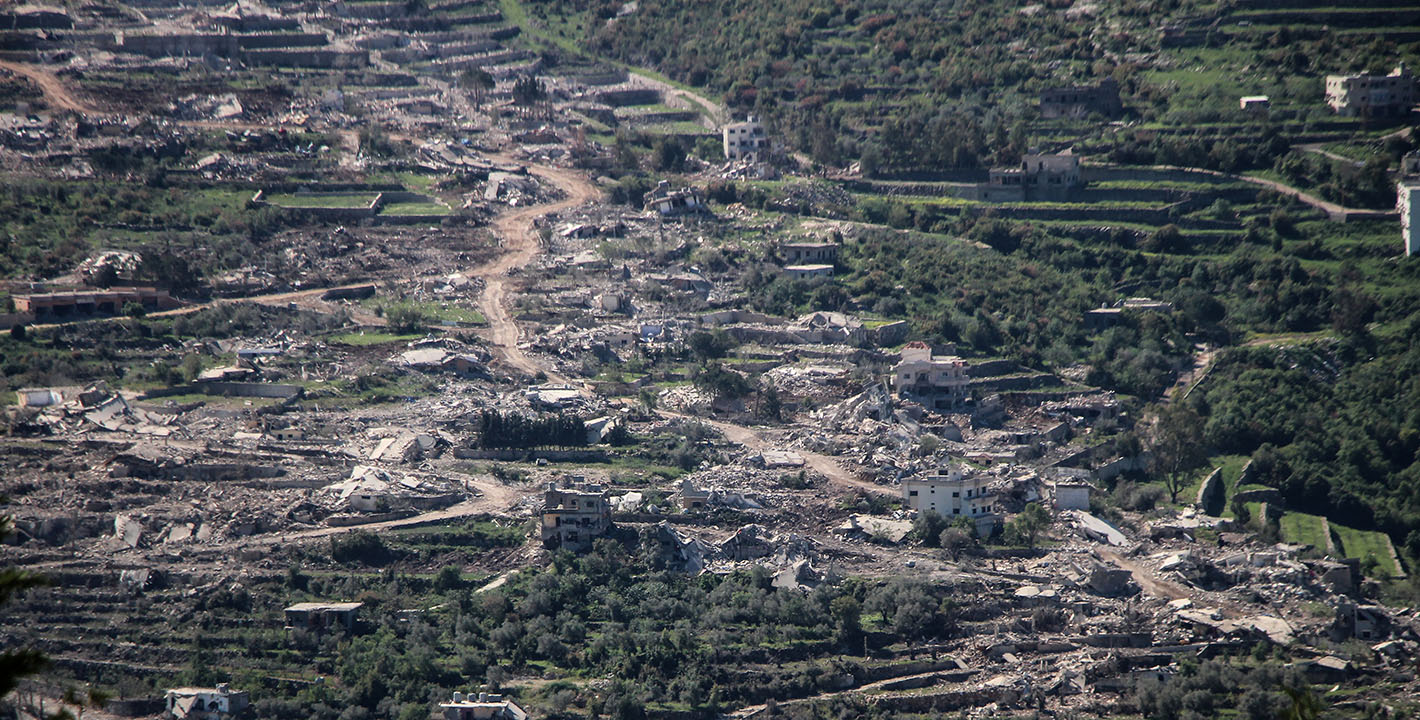
As negotiations with Iran and Lebanon continue, chaos is at the heart of the Netanyahu government’s calculations.
Michael Young